
Turner v. Rogers, 564 U.S. 431 is a case decided by the United States Supreme Court on June 20, 2011, that held that a state must provide safeguards to reduce the risk of erroneous Deprivation of Liberty ...
End date: 2011 Docket number: 10 Citation: 564.
Lawless Family Courts: Jailing people for debt is Unconstitutional - A form of Extortion from Bob Norton on Vimeo.
Many states are jailing people to extort money from their friends and families. This is literally extortion as civil courts are not allowed to use civil contempt to punish, nor jail people who do not have the money. Learn how to protect yourself from unlawful jail time with a few words.

Lawless Family Courts: Jailing people for debt is Unconstitutional - A form of Extortion from Bob Norton on Vimeo.
Many states are jailing people to extort money from their friends and families. This is literally extortion as civil courts are not allowed to use civil contempt to punish, nor jail people who do not have the money. Learn how to protect yourself from unlawful jail time with a few words.
Turner v. Rogers, the Court was asked if deadbeat dads who fail to pay child support have a right to counsel when facing incarceration.
Lawless Family Courts: Constitutional Law Requires Treating Everyone Equally - Judges Don't Care from Bob Norton on Vimeo.
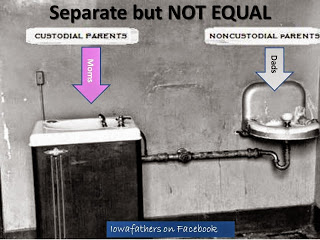
Sexism is rampant in family court, though not always the determining factor. Money generation almost always overrides this law. After illegal termination of one parents rights the litigation is on and everything you own, and could earn for up to 24 years is too. Honoring the 14th Amendment would mean granting equal time and custody in any case where both parents are fit, but that would not generate billions in federal kickbacks for all 50 state judicial systems - and they are now addicted to this money flow. The best interest of children will never get in the way of paychecks for their mostly unneeded jobs.
By Rebekah Diller, deputy director of the Justice Program at the Brennan Center for Justice. This is a cross-post from the Brennan Center’s blog. Posted on June 21, 2011.In a mixed result for the rights of indigent parents, the Supreme Court yesterday held that the year-long incarceration of a South Carolina man for failure to pay child support violated the Constitution because adequate safeguards had not been in place to ensure that his failure to pay was willful. However, the Court also ruled that parents facing jail time for failure to pay child support do not have a categorical right to a court-appointed defense attorney when the other parent is unrepresented.
The case, Turner v. Rogers, involved an appeal of an order finding Michael Turner in civil contempt because of his failure to pay child support. At the hearing, Mr. Turner had been unrepresented by counsel and had attempted to explain to the judge why he could not pay his debt. The judge did not make any finding as to Turner’s ability to pay the arrears and nonetheless ordered Turner to serve a year in prison.

Debt Collection Proceedings Not Addressed by Ruling
At the outset, it’s worth noting that the Court explicitly confined its ruling to cases in which an unrepresented custodial parent brings a petition for civil contempt. The Court appeared especially concerned about the potential for an imbalance of power if those in debt were appointed counsel while those seeking to collect the arrears — often mothers supporting their children — were not.
Thus, the Court did not address the question of whether counsel is required in the vast number of cases involving state agencies seeking to collect past due child support. Nationally, about half the outstanding child support debt is owed to the government, which obtains the right to collect from recipients of welfare benefits.
In addition, the decision did not address situations in which a court uses contempt or other proceedings to enforce court orders to pay fees arising out of criminal cases. A Brennan Center report last year found that out of 15 states studied, 11 had statutes or practices that authorize incarceration for willful failures to pay criminal justice debt, often under the guise of civil contempt.
Nor did the Court address “unusually complicated” cases in which counsel might be necessary to fully flesh out the issues.
Challenges to Enforcement
While Turner wisely left these situations for another day, it created a thorny set of implementation questions for the lower courts. Following the suggestion of the Solicitor General, the Court held that due process requires the following alternative procedures before an unrepresented parent can be incarcerated for failing to pay:
1. Notice that ability to pay is the issue to be decided;
2. A form to elicit information about financial circumstances;
3. An opportunity to respond to questions triggered by the form; and
4. An express finding by the court that the defendant has the ability to pay.
Such procedures are more than warranted and may well provide sufficient safeguards in a select number of cases. However, while the Supreme Court’s holding is the law of the land, it is unfortunately not self-executing. As my colleague Laura Abel has written, enforcement of these standards will require vigilance by the courts and bar alike.
What happens, for example, when a judge fails to make a finding about ability to pay, as the judge did here? Or when a court fails to make the right inquiries based on the responses to a form? Who will notice?
When counsel isn’t appointed at the outset, it’s all too easy for people to slip through the cracks and languish behind bars, as documented in this Brennan Center report on Florida’s criminal justice debt. Take the case of Rafael E. from Highlands County, Florida, who spent four months in jail several years ago for failing to pay court debts of less than $750, which no judge had ever determined he had the ability to pay. It was only after he happened to come to the attention of the local public defender that his release was secured.
With scant checks in the system, it is hard to take comfort in the procedural changes mandated by the Supreme Court. They will only work if state courts — already struggling with budget cuts and rising caseloads — find time to take extra care in their dealings with those who are unrepresented.

 | AmericanFathers LiberationArmy invited you to join the Vimeo group Parental Rights Class Action Lawsuit 2016 C.A.P.R.A. JOIN US |

10 members
Dedicated to the proposition that children are best served by having unfettered EQUAL access to BOTH parents and to the proposition that fathers are indispensable.
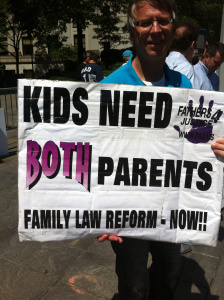
Improve the lives of children and strengthen society by protecting the child’s right to the love and care of both parents after separation or divorce. We seek better lives for children through family court reform!!
The Facebook Group is about the human rights of children with particular attention to the rights of special protection and care afforded to the young, including their right to association with both biological parents.
Read more about children's rights at en.wikipedia.org/wiki/Children%27s_rights
Activist sometimes exhibit impatience with theory - often for good reasons. They have seen nonviolence caught in an idealogical net in which the purity of idealogy eclipsed activity and the nonviolent effort was undermined by a deflection of energy. But nonviolent theory is absolutely necessary. It introduces to the world a new strategy for resisting evil without creating new evils and becoming evil ourselves. But more important, it articulates a new way of being that yields a vision of peace more powerful than all the armies of all the nations of the world. (Peace is the Way, 2000)
The Sixth Amendment to the U.S. Constitution has been interpreted to provide EVERY AMERICAN with the CONSTITUTIONAL right to self-representation, if they so choose. That privilege, like all other constitutional rights, should be enjoyed without fear of harassment, prejudice, or abuse. Furthermore, no law, regulation, or policy should exist to abridge or surreptitiously extinguish that right.
Self-Represented Litigants have no less of a right to FAIR and MEANINGFUL due process under the federal and state constitutions as those individuals who choose to utilize an attorney for their legal affairs and issues. In fact, NOWHERE in any state or federal constitution does it specify that the hiring of a lawyer is a prerequisite to exercising one's due process rights. Democratic principles dictate that we have the right to freely choose between self-representation and hiring a lawyer to handle our legal matters without suffering humiliation, prejudice, or penalization. After all, it is the parties to the litigation that ultimately have to deal with the consequences of the case's outcome, and not the judge or the lawyers involved in the matter.
Contrary to the view of certain judges and lawyers, those who opt to litigate their own legal matters without an attorney are NOT second-class citizens deserving of contempt and injustice. Instead, they are BRAVE CITIZENS with an inalienable right to have their legal causes adjudicated objectively and justly -- with or without a lawyer. Self-representation can be a difficult, time-consuming, and often frightening experience, especially for those burdened by demanding work schedules, family responsibilities, and other obligations of day-to-day living. Accordingly, those who engage in the difficult task of self-litigation should be REVERED for their COURAGE and DEDICATION, not scorned or abused.
We also need to amass momentous opposition against those persons, agencies, and institutions who, in the interest of protecting huge profits, careers, and prestige, subject self-litigants to a hostile and often abusive litigation atmosphere calculated to suppress self-representation and force people to become completely and financially dependent on lawyers to gain "paid" access to a taxpayer-funded legal system.
Improve the lives of children and strengthen society by protecting the child’s right to the love and care of both parents after separation or divorce. We seek better lives for children through family court reform!!
The Facebook Group is about the human rights of children with particular attention to the rights of special protection and care afforded to the young, including their right to association with both biological parents.
Read more about children's rights at en.wikipedia.org/wiki/Children%27s_rights
Activist sometimes exhibit impatience with theory - often for good reasons. They have seen nonviolence caught in an idealogical net in which the purity of idealogy eclipsed activity and the nonviolent effort was undermined by a deflection of energy. But nonviolent theory is absolutely necessary. It introduces to the world a new strategy for resisting evil without creating new evils and becoming evil ourselves. But more important, it articulates a new way of being that yields a vision of peace more powerful than all the armies of all the nations of the world. (Peace is the Way, 2000)
The Sixth Amendment to the U.S. Constitution has been interpreted to provide EVERY AMERICAN with the CONSTITUTIONAL right to self-representation, if they so choose. That privilege, like all other constitutional rights, should be enjoyed without fear of harassment, prejudice, or abuse. Furthermore, no law, regulation, or policy should exist to abridge or surreptitiously extinguish that right.
Self-Represented Litigants have no less of a right to FAIR and MEANINGFUL due process under the federal and state constitutions as those individuals who choose to utilize an attorney for their legal affairs and issues. In fact, NOWHERE in any state or federal constitution does it specify that the hiring of a lawyer is a prerequisite to exercising one's due process rights. Democratic principles dictate that we have the right to freely choose between self-representation and hiring a lawyer to handle our legal matters without suffering humiliation, prejudice, or penalization. After all, it is the parties to the litigation that ultimately have to deal with the consequences of the case's outcome, and not the judge or the lawyers involved in the matter.
Contrary to the view of certain judges and lawyers, those who opt to litigate their own legal matters without an attorney are NOT second-class citizens deserving of contempt and injustice. Instead, they are BRAVE CITIZENS with an inalienable right to have their legal causes adjudicated objectively and justly -- with or without a lawyer. Self-representation can be a difficult, time-consuming, and often frightening experience, especially for those burdened by demanding work schedules, family responsibilities, and other obligations of day-to-day living. Accordingly, those who engage in the difficult task of self-litigation should be REVERED for their COURAGE and DEDICATION, not scorned or abused.
We also need to amass momentous opposition against those persons, agencies, and institutions who, in the interest of protecting huge profits, careers, and prestige, subject self-litigants to a hostile and often abusive litigation atmosphere calculated to suppress self-representation and force people to become completely and financially dependent on lawyers to gain "paid" access to a taxpayer-funded legal system.
__________________________
This Children's Rights Facebook Group, Page and Cause have been created for positive outreach, networking, distribution and discussion of information related to our cause.







No comments:
Post a Comment